16 years of experience in the warehousing equipment industry
A comprehensive enterprise integrating research and development, production, sales, and installation


WE MAKE RACKING PROFESSIONAL
Specialize in heavy duty rack and mezzanine rack.
Drive-In Racks: Maximizing Warehouse Storage Efficiency
How Drive-In Racks Work
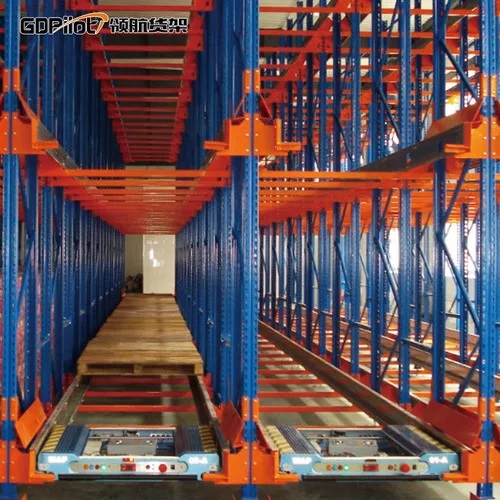
The structure of drive-in racks consists of upright frames, horizontal beams, and guide rails. The guide rails are installed along the length of the rack lanes, guiding forklifts safely into the interior to place or retrieve pallets. Each lane typically has a single entry/exit point, and pallets are stacked one behind the other along the lane. When a forklift enters the lane, it places new pallets at the deepest available position, pushing existing pallets forward. To retrieve a pallet, the forklift removes the most recently added one first, following the LIFO principle.
This design eliminates the need for aisles between each rack section, significantly reducing the amount of floor space dedicated to access paths. Compared to selective racks, drive-in racks can increase storage density by 40% to 60%, making them an excellent choice for warehouses with limited space or high storage volume requirements.
Key Advantages of Drive-In Racks
1. High Storage Density
The most prominent benefit of drive-in racks is their ability to maximize storage capacity. By reducing aisle space, warehouses can store more pallets in the same footprint. This is particularly valuable for facilities located in areas with high real estate costs, as it allows businesses to get more value from their existing space without expanding the warehouse.
2. Cost-Effective Space Utilization
By increasing storage density, drive-in racks help lower the cost per pallet stored. Businesses can avoid the expense of warehouse expansion, rental of additional space, or relocation by optimizing their current storage area. Additionally, the simplified structure of drive-in racks often results in lower installation and material costs compared to other high-density storage systems.
3. Suitable for Bulk Homogeneous Products
Drive-in racks are perfect for storing large quantities of the same product, such as raw materials, finished goods with stable demand, or seasonal inventory. Since access is limited to the most recently added pallets, this system works best when inventory turnover is low or when products are stored in batches.
4. Versatility in Different Environments
These racks are adaptable to various warehouse conditions, including cold storage facilities, refrigerated environments, and ambient temperature warehouses. They can be customized to accommodate different pallet sizes and weights, making them suitable for a wide range of industries.
Considerations for Choosing Drive-In Racks
1. Inventory Turnover Rate
Due to the LIFO system, drive-in racks are not recommended for products with high turnover rates or those requiring frequent access to specific pallets. If your inventory requires "first-in, first-out" (FIFO) rotation, consider drive-through racks, which have entry and exit points at opposite ends.
2. Forklift Compatibility
Forklifts must be compatible with drive-in racks to ensure safe and efficient operation. It is important to consider the forklift’s lift height, load capacity, and maneuverability within the rack lanes. Narrow-aisle forklifts or reach trucks are often used with drive-in racks to optimize space further.
3. Pallet Uniformity
For optimal performance, drive-in racks require consistent pallet sizes and weights. Irregular pallets can cause instability, safety hazards, and reduced storage efficiency. Ensure that your pallets meet the rack manufacturer’s specifications.
4. Safety Measures
Safety is crucial when using drive-in racks, as forklifts operate within the rack structure. Install safety features such as rack guards, guide rails, and load backstops to prevent collisions and pallet damage. Additionally, train forklift operators on proper handling procedures for drive-in racks.
Applications of Drive-In Racks
Drive-in racks are widely used across various industries, including:
Food and Beverage: Storing bulk items such as grains, canned goods, and bottled beverages with stable demand.
Cold Storage: Maximizing space in refrigerated or frozen warehouses, where energy costs and space are critical factors.
Manufacturing: Storing raw materials, work-in-progress (WIP) inventory, and finished products in bulk.
Retail Distribution: Holding seasonal inventory, overstock items, or slow-moving products.
Chemical and Pharmaceutical: Storing non-hazardous bulk chemicals, pharmaceuticals, and packaging materials.
Conclusion
Drive-in racks are a practical and cost-effective storage solution for businesses looking to maximize warehouse space efficiency. With their high storage density, versatility, and suitability for bulk homogeneous products, they can help reduce operational costs and improve inventory management. However, it is essential to consider factors such as inventory turnover, forklift compatibility, and safety measures to determine if drive-in racks are the right choice for your warehouse. By selecting the appropriate storage system, businesses can optimize their operations and gain a competitive edge in today’s fast-paced supply chain environment.