16 years of experience in the warehousing equipment industry
A comprehensive enterprise integrating research and development, production, sales, and installation


WE MAKE RACKING PROFESSIONAL
Specialize in heavy duty rack and mezzanine rack.
Medium-Sized Shelves: The Versatile Storage Solution for Every Need
Core Features of Medium-Sized Shelves
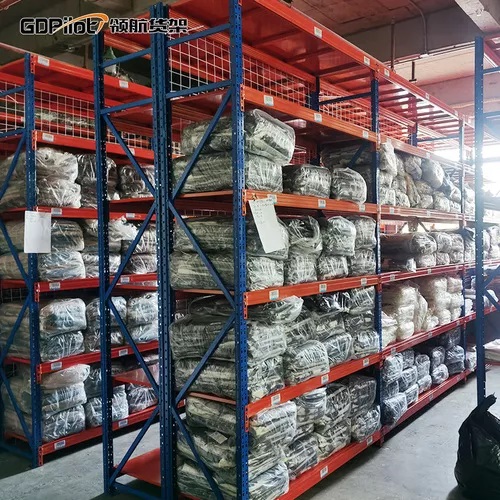
What sets medium-sized shelves apart from other storage solutions is their balanced design, which integrates functionality and convenience. Here are their key characteristics:
Durable Material & Anti-Rust Treatment: Most medium-sized shelves are made of high-quality Q235 cold-rolled steel, a material known for its sturdiness and long service life. The surface is typically treated with electrostatic spraying, which effectively prevents rust and corrosion, ensuring the shelves can withstand long-term use in various environments, including humid warehouses or dusty workshops.
Flexible & Easy Assembly: Adopting a fully assembled structure, medium-sized shelves can be freely combined, installed and disassembled without complex tools. They often feature a main frame and auxiliary frame design—independent main frames can be used alone, while auxiliary frames can share a column with the main frame to save space and cost. Additionally, the column is equipped with adjustable hole spacing (usually 50mm or 75mm), allowing users to adjust the layer height according to the size of the stored goods, greatly enhancing flexibility.
Reliable Load-Bearing Capacity: Depending on the type (standard or non-standard), the load-bearing capacity of each layer ranges from 100kg to 1000kg. Standard models usually bear 100-350kg per layer, while non-standard models with larger spans can bear 300-1000kg per layer, meeting the storage needs of medium-weight goods such as cartons, tools, electronic components and daily necessities.
Safe & Stable Structure: The beams and columns are connected by steel buckles and equipped with safety pins to prevent falling, ensuring the stability of the entire shelf. Adjacent columns can be connected by spacers to strengthen the connection, and the bottom can be used with ground nails to further improve safety and reliability. These designs effectively avoid shelf instability caused by external impact or improper use.