16 years of experience in the warehousing equipment industry
A comprehensive enterprise integrating research and development, production, sales, and installation


WE MAKE RACKING PROFESSIONAL
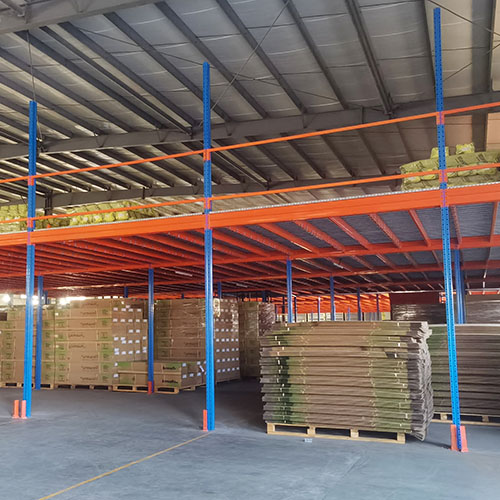
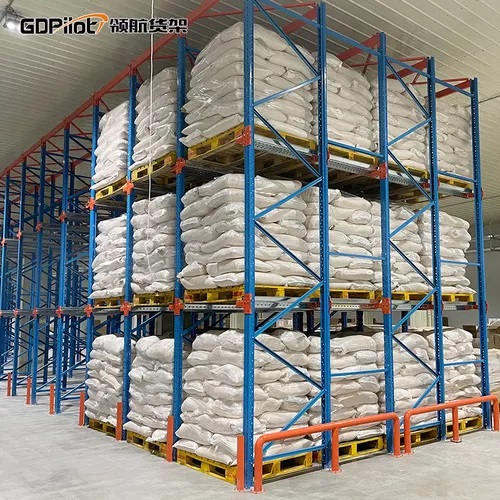
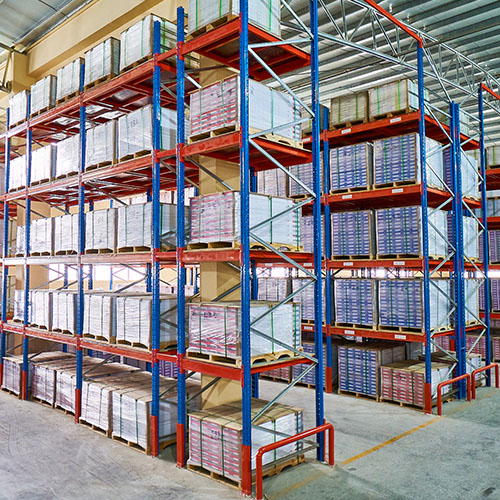
Specialize in heavy duty rack and mezzanine rack.
Intelligent Warehouse Racks: Transforming Storage into a Smart, Efficient Core of Modern Supply Chains
In the era of rapid global logistics development and the booming growth of e-commerce, traditional warehouse racks—
once merely static containers for goods—can no longer meet the demands of high efficiency, high density, and precise management
in modern supply chains. Today, intelligent warehouse racks have emerged as a core component of smart logistics, integrating Internet
of Things (IoT), sensors, automation technology, and data analytics to transform passive storage into dynamic,
interactive, and data-driven operational nodes. This evolution is not just a technological upgrade of storage equipment,
but a fundamental reconstruction of warehouse management logic, empowering enterprises to achieve lean operations, cost reduction,
and efficiency improvement in the fiercely competitive market.
Unlike traditional warehouse racks that only serve the basic function of storing goods, intelligent warehouse racks are equipped with
advanced hardware and software systems, making them "perceivable, interactive, and schedulable" smart terminals.
At the core of their functionality lies the integration of IoT technology and smart sensors, which enable real-time monitoring of
every aspect of the storage process. For example, load sensors embedded in the rack beams can detect the weight of goods in real time,
triggering alerts when the load exceeds the safety limit to prevent structural damage and safety hazards. Gravity sensors and presence
detectors can automatically track inventory levels, sending replenishment reminders when stock falls below a preset threshold,
thus avoiding stockouts and improving inventory turnover efficiency. Meanwhile, RFID (Radio Frequency Identification) technology
integrated into the racks allows for batch identification of goods without manual scanning, significantly speeding up inventory counting
and incoming/outgoing inspections—京东 Logistics’ Asia No.1 smart warehouse, for instance, increased inventory counting accuracy
from 92% to 99.98% after adopting RFID intelligent racks.
Another key advantage of intelligent warehouse racks is their seamless integration with automated storage and retrieval systems (AS/RS),
shuttle cars, AGVs (Automated Guided Vehicles), and WMS (Warehouse Management Systems), forming a fully automated
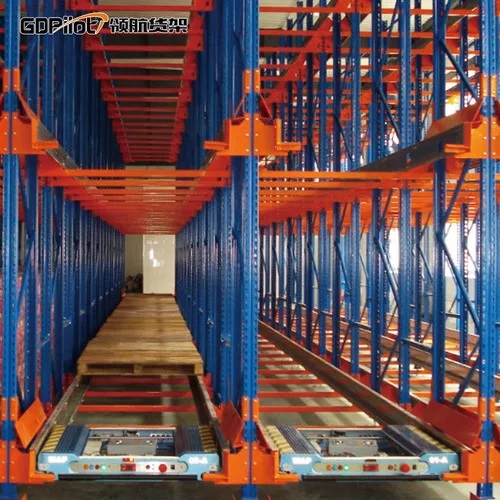
smart storage ecosystem. Shuttle car-integrated intelligent racks, for example, are equipped with built-in tracks that allow shuttle cars
to move horizontally and vertically, realizing the "Goods-to-Person" picking mode. This mode eliminates the need for workers to walk back
and forth between racks, shortening the average picking path by more than 40% and significantly improving picking efficiency.
In high-density storage scenarios, double-deep, multi-deep, or mobile intelligent racks maximize space utilization by compressing aisles,
enabling enterprises to store more goods in the same warehouse area—some smart warehouses have increased unit area storage capacity
by up to 41.5% compared to traditional warehouses. Additionally, the open interfaces of intelligent racks allow seamless connection with ERP,
WCS (Warehouse Control System), and other enterprise management systems, realizing data sharing and unified scheduling of
the entire supply chain, from procurement and storage to distribution and after-sales.
The application of intelligent warehouse racks is highly versatile, adapting to the diverse needs of multiple industries
and solving industry-specific pain points. In the e-commerce and retail industry, where there are massive SKUs and
high order processing pressure, intelligent racks with electronic shelf labels (ESL) achieve "pick by light" operations,
with an accuracy rate exceeding 99.9%, effectively coping with peak order periods such as Black Friday and Double 11. In the pharmaceutical
and cold chain industry, intelligent racks integrated with temperature-sensitive sensors and constant temperature
control systems ensure that drugs, vaccines, and frozen foods are stored within the required temperature range (2-8℃ for vaccines),
with real-time temperature monitoring and automatic alerts for deviations, meeting strict industry regulations and safety requirements.
In the manufacturing industry, especially automotive and electronic manufacturing, intelligent racks realize precise storage and
traceability of precision components and auto parts, reducing losses caused by manual operation and supporting just-in-time
(JIT) production modes. Even in industries such as fast-moving consumer goods (FMCG), third-party logistics (3PL), and new energy,
intelligent warehouse racks have become an indispensable tool for improving operational efficiency and reducing costs— Express,
for example, increased per capita picking efficiency from 60 pieces per hour to 220 pieces per hour
after deploying intelligent racks in its hub centers.
Beyond immediate operational benefits, intelligent warehouse racks also bring long-term value to enterprises through data-driven
optimization and sustainable development. The massive data collected by the racks—including inventory turnover, goods flow, load status,
and equipment operation—can be analyzed using big data and AI algorithms to optimize warehouse layout and inventory allocation.
For instance, the system can automatically move best-selling products to golden picking areas and products to secondary
areas based on order popularity and inventory age, realizing "goods follow orders" and improving overall operational efficiency.
AI algorithms can also predict future demand peaks by analyzing historical sales data and seasonal fluctuations, helping enterprises
achieve scientific inventory planning and reduce inventory holding costs by up to 30%. In terms of sustainability,
intelligent warehouse racks adopt modular designs and high-quality recyclable steel materials, reducing resource
waste during production and installation. Additionally, automated operations reduce energy consumption and carbon emissions
—DHL reported a 12% reduction in fleet mileage in Europe after adopting intelligent storage systems,
equivalent to planting 50,000 trees annually.
Looking ahead, with the continuous advancement of technologies such as 5G, digital twins, and AI, intelligent warehouse racks
will move towards a more intelligent, flexible, and integrated future. Digital twin technology will create virtual models of warehouse racks,
allowing enterprises to simulate operation flows, predict bottlenecks, and optimize layouts without disrupting actual operations.
Flexible electronic skin sensors will enable racks to be attached to objects of any shape, achieving true "Internet of Everything"
in storage environments. Meanwhile, the rise of RaaS (Robotics as a Service) business models will lower the threshold for small
and medium-sized enterprises to adopt intelligent racks, allowing them to enjoy the benefits of smart storage through
on-demand subscription services. The integration of intelligent racks with smart supply chains will also become deeper,
realizing end-to-end visibility and traceability, and helping enterprises build more agile, efficient, and resilient supply chain systems.
In conclusion, intelligent warehouse racks have transcended the traditional definition of storage equipment, evolving into
a core driving force for the digital transformation of modern warehouses. By combining hardware innovation with data intelligence,
they solve the pain points of low efficiency, high labor costs, and poor inventory visibility in traditional storage,
bringing tangible benefits to enterprises in various industries. Whether it is improving space utilization, optimizing operational efficiency,
ensuring product safety, or reducing carbon emissions, intelligent warehouse racks are playing an irreplaceable role
in the era of smart logistics. For enterprises seeking to gain a competitive edge in the global supply chain, investing in intelligent
warehouse racks is not just a choice for technological upgrading, but a strategic layout for long-term development.