16 years of experience in the warehousing equipment industry
A comprehensive enterprise integrating research and development, production, sales, and installation


WE MAKE RACKING PROFESSIONAL
Specialize in heavy duty rack and mezzanine rack.
Drive-In Racking | High-Density Warehouse Storage Solution
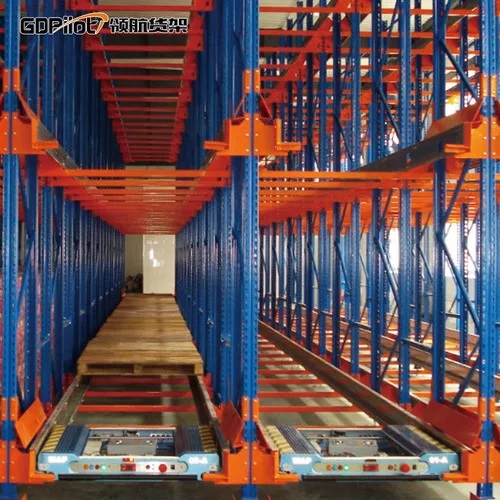
Drive-in racking, also known as drive-through racking, is engineered for high-capacity and high-efficiency warehouse storage scenarios. The whole system features a frameless continuous rail supporting structure, where pallets are placed on continuous support rails instead of traditional cross beams. Each storage lane can hold multiple pallets in depth, making full use of vertical and horizontal warehouse space and greatly reducing wasted floor area caused by frequent reserved aisles.
This racking system mainly follows the LIFO (Last In, First Out) inventory management principle. Goods loaded latest are picked first, which perfectly matches the storage characteristics of bulk goods with low picking frequency and single product specification. For customized scenarios, the drive-through structure supports FIFO (First In, First Out) operation to meet diverse inventory turnover demands. The main components include high-strength cold-formed steel upright frames, reinforced load support rails, anti-collision guide devices and pallet stoppers. All structural parts undergo strict welding and surface treatment, featuring strong load-bearing capacity, impact resistance and stable structure, adapting to long-term high-intensity warehouse operation.
Compared with other storage racking systems, drive-in racking has prominent advantages in space utilization and cost control. It saves more warehouse space than selective pallet racking and requires no complex auxiliary equipment such as trolleys, resulting in lower investment and maintenance costs. With an all-steel sturdy structure, it can adapt to special working environments such as low-temperature cold storage and high-dust factory workshops, with a long service life. It is the preferred storage solution for enterprises that need to store large quantities of standardized goods, optimize warehouse layout and reduce storage operating costs.
In terms of operation and management, the modular assembly design enables quick installation, disassembly and adjustment, facilitating later warehouse layout optimization and equipment migration. Equipped with professional forklift guiding and anti-collision protection structures, it effectively reduces equipment collision risks and improves overall warehouse operation safety and standardization.