16 years of experience in the warehousing equipment industry
A comprehensive enterprise integrating research and development, production, sales, and installation


WE MAKE RACKING PROFESSIONAL
Specialize in heavy duty rack and mezzanine rack.
How to Choose the Right Warehouse Shelving & Racking System for Your Storage Needs
With various racking types available, including heavy-duty pallet racks, mezzanine shelves, medium-duty racks, and smart storage systems, many warehouse managers struggle to find the perfect fit. This guide will walk you through all key factors to help you select the most suitable warehouse shelving for your facility.
1. Evaluate Your Warehouse Actual Site Conditions
Before selecting any shelf type, you must first analyze your warehouse’s basic physical conditions, as these factors directly determine which racking structures are installable and practical.
Ceiling Height: Ceiling height is the primary factor for shelf layout. Low-ceiling warehouses (below 3.5m) are more suitable for medium-duty and light-duty multi-layer shelves. Warehouses with a height above 4m can install heavy-duty high-bay pallet racks. If your ceiling exceeds 5m, mezzanine shelving is an ideal option to utilize vertical space and expand storage area.
Floor Bearing Capacity: Factory floor load limits the use of heavy-duty storage systems. Heavy pallet racks and multi-layer mezzanines require strong floor bearing capacity. You must confirm floor load data in advance to avoid structural safety risks.
Warehouse Layout & Aisle Space: Measure aisle width to match handling equipment. Narrow aisles suit selective narrow-aisle racks, while wide aisles can support forklift operation and standard pallet racking.
2. Confirm Your Cargo Storage Characteristics
Different goods correspond to completely different shelf solutions. You need to classify your inventory before making a choice.
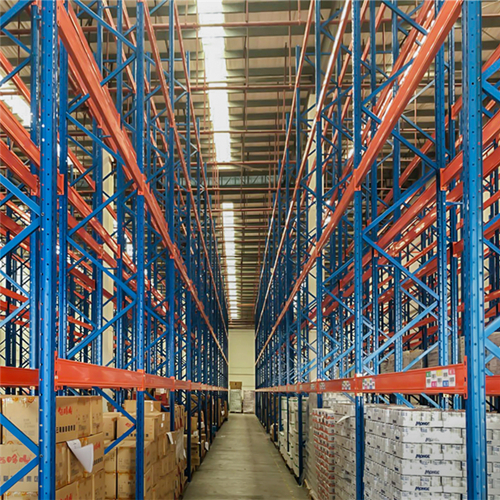
Cargo Weight: Heavy palletized goods, machinery parts, and hardware materials require heavy-duty pallet racks with strong load capacity. Light boxed goods, accessories, and daily supplies can use medium or light-duty shelves to save costs.
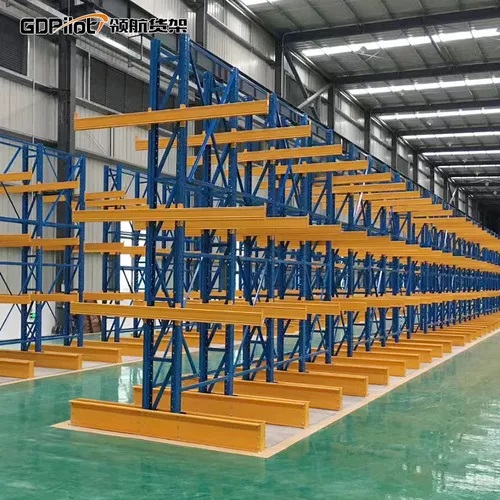
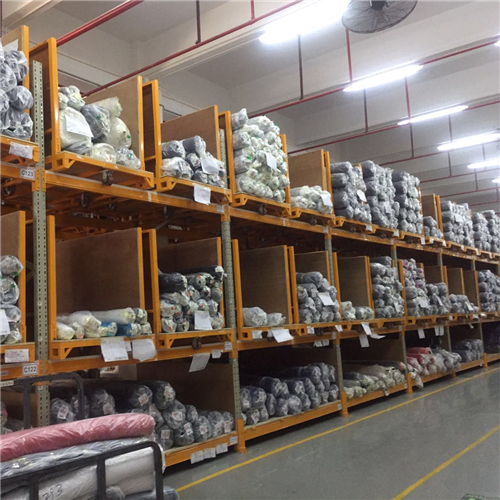
Cargo Size & Packaging: Large and irregular goods suit cantilever racks or heavy open racks. Small parts, electronic components, and spare parts are more suitable for multi-layer dense shelving or smart shelves with precise positioning.
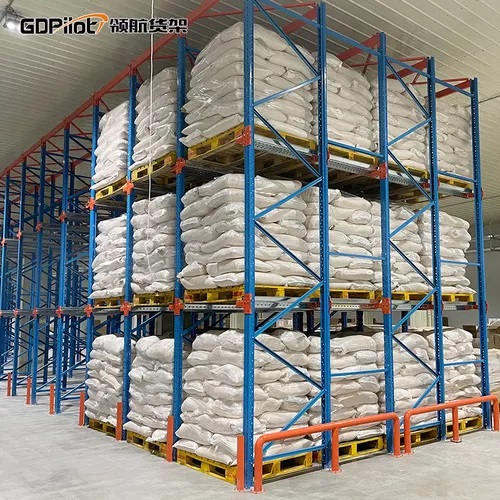
Inventory Turnover Frequency: Fast-moving goods that require frequent access fit selective pallet racks with 100% direct access. Slow-moving bulk inventory can use mezzanine floors or drive-in racks to improve storage density.
3. Match Shelving Type with Your Operational Mode
Each warehouse has different operational workflows, and your shelving system must adapt to your daily management mode.
Manual Operation Warehouse: Small and medium warehouses relying on manual picking are recommended to use medium shelves, light shelves, or mezzanine platforms. These structures have safe walking spaces and flexible layer heights, suitable for manual sorting and storage.
Forklift Operation Warehouse: Large industrial warehouses with forklift handling should choose standard heavy-duty pallet racks, drive-in racks, or push-back racks to realize fast loading and unloading and high-volume storage.
Digital & Intelligent Warehouse: Factories pursuing refined management and automatic inventory can upgrade to smart shelving systems with sensor monitoring, light picking guidance, and real-time data synchronization to reduce manual errors and labor costs.
4. Clarify Your Core Warehouse Goals
Different management goals determine your final shelf selection:
Goal: Maximize storage capacity — Choose drive-in racks, shuttle racks, or mezzanine shelving to improve space density.
Goal: Fast picking & high efficiency — Choose selective heavy-duty pallet racks for full direct access.
Goal: Low budget & cost saving — Choose economical medium-duty and light-duty combined shelves.
Goal: Digital management & low error rate — Choose intelligent IoT smart shelving systems.
5. Consider Long-Term Safety & Scalability
A qualified warehouse shelf solution cannot only focus on current use; safety and future expansion are also essential considerations.
Safety Performance: Always choose standardized shelves with stable structure, uniform load capacity, and complete safety accessories such as column protectors, safety pins, and guardrails. Avoid low-cost non-standard shelves that are prone to deformation and collapse.
Scalability: Business growth will bring more inventory and more SKUs. It is recommended to adopt modular assembled shelving systems that support later height adjustment, layer addition, and layout expansion, avoiding repeated investment.
Quick Reference: Which Shelf Is Right for You?
Heavy Palletized Goods + Forklift Warehouse → Heavy-Duty Pallet Racking
Insufficient Space + High Ceiling → Mezzanine Shelving
Small Parts & Manual Picking → Medium & Light-Duty Shelving
High-Precision Materials & Low Error Requirement → Smart Shelving System
Long Bulk Materials & Pipe Storage → Cantilever Racking
Final Thoughts
Selecting the right warehouse shelving is a systematic project that combines site conditions, cargo characteristics, operational efficiency, budget, and safety requirements. The best racking system is not the most expensive one, but the one that perfectly matches your warehouse operation logic. A scientific shelf layout can greatly optimize storage efficiency, save warehouse space, and create long-term economic value for your enterprise.
If you are still confused about warehouse shelving selection, professional customized solutions can help you maximize your warehouse value and achieve efficient, safe, and standardized storage management.