16 years of experience in the warehousing equipment industry
A comprehensive enterprise integrating research and development, production, sales, and installation


WE MAKE RACKING PROFESSIONAL
Specialize in heavy duty rack and mezzanine rack.
Heavy Duty Racks: The Backbone of Efficient Industrial Storage
What Are Heavy Duty Racks?
Unlike light or medium-duty shelving, heavy duty racks are designed to withstand extreme weights—often ranging from 1,000 kg to 6,000+ kg per level—and are built with thicker steel beams, sturdy uprights, and reinforced structures to ensure stability under heavy loads. They are distinct from consumer-grade shelving, which lacks the load-bearing capacity and durability required for industrial use, and they comply with stringent safety standards to withstand the wear and tear of busy industrial environments. These racks are available in various configurations, each tailored to specific storage needs, and can be integrated with material handling equipment like forklifts, automated guided vehicles (AGVs), and order pickers to streamline operations.
Common Types of Heavy Duty Racks
Heavy duty racks come in a range of designs to accommodate different inventory types, space constraints, and access requirements. The most widely used types include:
1. Selective Pallet Racks
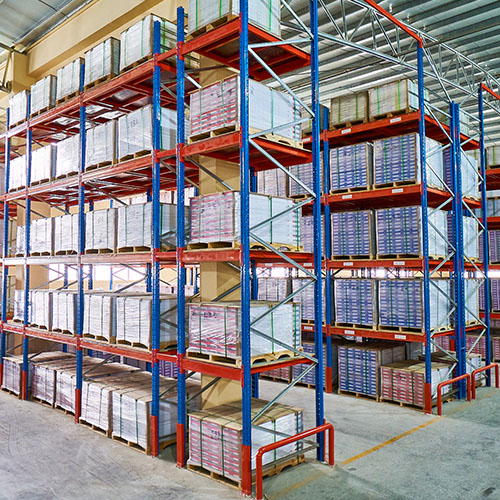
The most common heavy duty rack system, selective pallet racks allow direct access to each pallet without moving other units, making them ideal for businesses with a wide range of SKUs and moderate storage density needs. They offer load capacities of 1,000–3,000 kg per pallet location, are easy to install and adjust, and are compatible with standard forklifts. This flexibility makes them a popular choice for e-commerce warehouses, retail distribution centers, and manufacturing facilities where quick inventory access is critical.
2. Drive-In/Drive-Through Racks
Designed for high-volume, low-SKU storage, drive-in/drive-through racks allow forklifts to drive directly into the rack structure to load and unload pallets. With load capacities of 1,500–2,000 kg per pallet, these racks maximize space utilization by reducing the number of aisles, making them perfect for cold storage facilities, food and beverage warehouses, and bulk storage of homogeneous goods like raw materials or packaged products. Drive-through racks offer bidirectional access, while drive-in racks have a single entry/exit point, both optimizing storage density but requiring specialized forklift operation.
3. Push-Back Racks
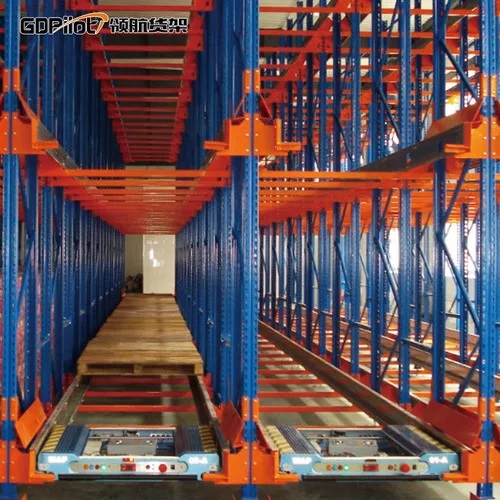
Push-back racks use inclined rails and carts to store pallets multiple levels deep—when a new pallet is loaded, it pushes existing pallets back, following a last-in, first-out (LIFO) storage principle. With load capacities of up to 2,000 kg per pallet, these racks offer higher storage density than selective racks and are ideal for bulk storage of homogeneous items such as building materials, automotive parts, or bulk packaging. They reduce aisle space while maintaining efficient access to inventory, making them suitable for warehouses with limited floor space but high storage volume needs.
4. Cantilever Racks
Specialized for long, bulky items like steel beams, pipes, lumber, or machinery parts, cantilever racks feature horizontal arms extending from vertical uprights, eliminating the need for front beams that would block access. They offer exceptional load capacity for long items and can be customized with adjustable arm heights to accommodate different lengths and weights. Cantilever racks are widely used in construction material yards, metal fabrication facilities, and warehouses storing irregularly shaped heavy goods.
Key Features & Benefits of Heavy Duty Racks
Heavy duty racks are designed to address the unique challenges of industrial storage, offering a range of benefits that enhance efficiency, safety, and cost-effectiveness:
Exceptional Load-Bearing Capacity: Engineered to support heavy and bulky items, with per-level load capacities ranging from 1,000 kg to over 6,000 kg, ensuring safe storage of even the heaviest inventory such as machinery parts, steel coils, or palletized bulk goods.
Space Optimization: Maximize vertical space utilization, allowing warehouses to store more inventory without expanding floor space. Tall configurations (up to 20 meters high) can be paired with forklifts or raised walkways for access to upper levels, making the most of available ceiling height.
Modular & Scalable Design: Most heavy duty racks feature a modular structure, allowing easy customization, reconfiguration, and expansion as storage needs grow. Additional modules or levels can be added without disrupting existing operations, making them a long-term, adaptable solution.
Durability & Longevity: Constructed from high-quality reinforced steel (such as Q235b cold-rolled steel) with thicknesses ranging from 1.5 mm to 2.0 mm, these racks resist corrosion, wear, and impact, ensuring a long lifespan and reducing maintenance and replacement costs. Many are coated or treated to withstand harsh industrial environments, including moisture and temperature changes.
Enhanced Workflow Efficiency: By organizing inventory and enabling easy access, heavy duty racks streamline loading, unloading, and picking processes. Integration with forklifts, AGVs, and other material handling equipment reduces labor time and minimizes errors, improving overall warehouse productivity.
Safety & Compliance: Built to meet strict industrial safety standards, heavy duty racks often include safety accessories such as column guards, safety barriers, wire decking, and pallet supports to prevent accidents, protect inventory, and ensure compliance with workplace safety regulations.
Applications of Heavy Duty Racks
Heavy duty racks are versatile and widely used across various industries, where reliable, high-capacity storage is essential:
Warehousing & Logistics: The backbone of distribution centers, e-commerce warehouses, and freight facilities, storing palletized goods, packages, and bulk inventory to optimize supply chain operations.
Manufacturing: Used to store raw materials, semi-finished products, and heavy machinery parts, ensuring easy access to production materials and streamlining manufacturing processes.
Automotive Industry: Ideal for storing vehicle parts, engines, tires, and accessories, optimizing warehouse logistics and speeding up production and maintenance operations.
Construction & Building Materials: Used to store steel beams, pipes, lumber, cement bags, and other heavy construction materials, keeping worksites organized and materials easily accessible.
Cold Storage: Drive-in and selective pallet racks are commonly used in cold storage facilities for food, beverages, and pharmaceuticals, maximizing space while maintaining easy access to temperature-sensitive goods.
Garages & Workshops: Heavy duty utility racks are designed for home garages, auto repair shops, and DIY workshops, storing tools, automotive parts, and seasonal equipment while withstanding harsh conditions.
Choosing the Right Heavy Duty Rack
Selecting the appropriate heavy duty rack depends on several key factors, including the type and weight of inventory, storage space constraints, access frequency, and industry-specific needs. Consider the following when choosing a system:
Load Capacity: Determine the maximum weight of the items you need to store, both per unit and per shelf, to ensure the rack can safely support the load.
Inventory Type: For long, bulky items, choose cantilever racks; for high-volume, low-SKU inventory, opt for drive-in/drive-through racks; for diverse SKUs, selective pallet racks are ideal.
Space Availability: Evaluate floor space and ceiling height—tall vertical racks maximize vertical space, while compact designs like push-back racks reduce aisle space needs.
Access Requirements: If you need frequent access to individual pallets, selective racks are best; for bulk storage with less frequent access, drive-in or push-back racks are more efficient.
Scalability: Choose a modular system that can be expanded as your business grows, avoiding the need for costly replacements in the future.
Conclusion
Heavy duty racks are more than just storage solutions—they are a critical investment in the efficiency, safety, and scalability of industrial operations. By providing exceptional load-bearing capacity, optimizing space utilization, and streamlining workflow, these racks help businesses reduce costs, improve productivity, and adapt to changing storage needs. Whether you operate a large warehouse, a manufacturing plant, an automotive facility, or a small workshop, the right heavy duty rack system can transform your storage space into a well-organized, high-performing hub. With a wide range of types and configurations available, there is a heavy duty rack solution to meet every industrial storage challenge, ensuring your inventory is safe, accessible, and efficiently managed for years to come.